
But I must explain to you how all this mistaken idea
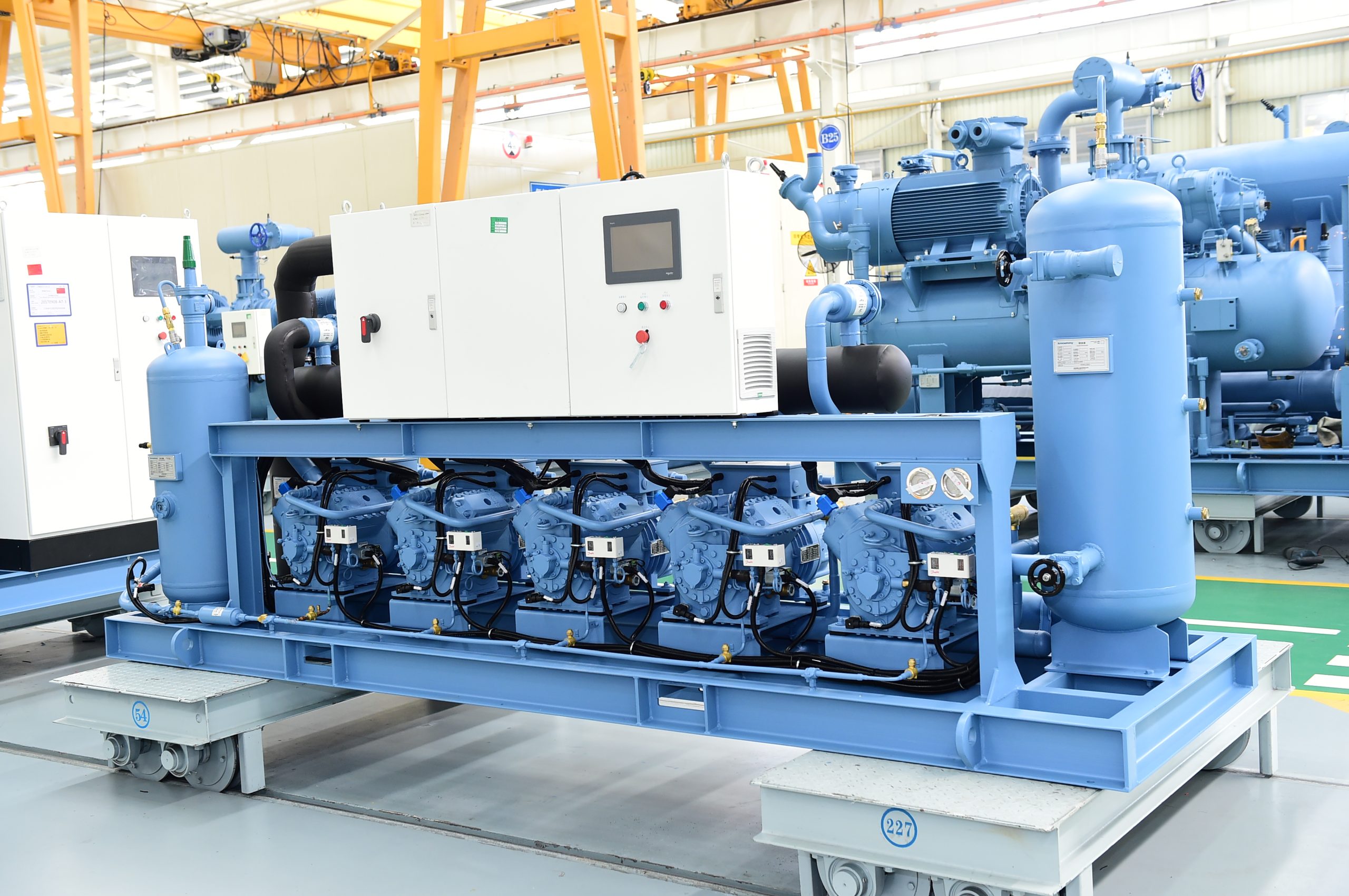
🔧 What Is a Standard Condensing Unit?
— Configuration Breakdown & Selection Guide
In commercial refrigeration and cold storage applications, the condensing unit is the core of the entire system. It plays a key role in compressing and condensing refrigerant, thus ensuring efficient system operation.
In this article, we’ll walk through the standard configuration of air-cooled condensing units, their key components, reference parameters, application scenarios, and professional selection tips — everything you need to know to choose the right unit for your project.

✅ Key Components of a Standard Condensing Unit
A standard air-cooled condensing unit typically consists of the following:
1. Refrigeration Compressor
Reciprocating or scroll type, screw type for larger capacities.
Drives the refrigerant circulation by compressing low-pressure vapor to high-pressure gas.
2. Air-Cooled Condenser
Fin-type heat exchanger with axial fans.
Condenses high-pressure gas into liquid, releasing heat into ambient air.
3. Axial Fans & Motors
High airflow and low noise for efficient heat dissipation.
4. Liquid Receiver
Stores and stabilizes the flow of condensed liquid refrigerant.
5. Sight Glass & Filter Drier
Removes moisture and impurities while indicating refrigerant status.
6. Oil Separator
Recovers lubricant oil from discharge gas to prevent compressor wear.
7. Suction Accumulator
Prevents liquid refrigerant from returning to the compressor (liquid slugging protection).
8. Solenoid Valve
Controls refrigerant flow; works with pressure/temperature controllers.
9. Pressure Gauges & Switches
Monitor and protect system pressure status.
10. Electrical Control Box
Includes contactors, overload protectors, and pressure controls for system management.
⚙️ Standard Specification (Reference Values)
| Parameter | Typical Range |
|---|---|
| Compressor Power | 5 to 30 HP |
| Cooling Capacity | 10 to 100 kW |
| Refrigerant Types | R404A, R134a, R507A, R448A, etc. |
| Application Temp. | -25°C to +10°C |
| Power Supply | 380V / 3Ph / 50Hz (customizable) |
| Control Mode | Auto / Manual |
🌍 Application Scenarios
Standard condensing units are widely used in:
- Cold rooms for fruits, vegetables, seafood, meat
- Restaurant and supermarket refrigeration
- Pharmaceutical cold storage
- Small to medium logistics cold chain centers
- Industrial process cooling systems
🎯 Selection Tips
- Match unit capacity precisely to project cooling load.
- Choose condenser size based on local ambient conditions.
- Select refrigerant type suitable for your temperature zone.
- Confirm power supply and compliance for export markets.
- Ensure key components (oil separator, accumulator, etc.) are included for long-term reliability.
🧊 Summary
A well-configured condensing unit is critical for the energy efficiency, safety, and longevity of any cold room or refrigeration system.
From compressor and condenser to oil separators, accumulators, solenoid valves, and pressure controls, every part plays a role in ensuring optimal system operation.
Looking for high-quality, technically reliable, and fast-delivery condensing units for your project?
👉 Contact [icevibe] — We’ll help you find the ideal configuration tailored to your needs.